Why Did Water Pressure Fall Overnight?
A sudden overnight pressure loss can point to a supply change, a leak, or a problem inside your plumbing. If several fixtures are weak in the morning, note whether the cold and hot taps are both affected before changing anything. Low water pressure can make showers and routine cleanup take longer, but the pattern helps narrow the cause.
One faucet alone suggests a local fixture issue; multiple rooms suggest a broader supply or piping problem. In Minnesota, cold winters increase frozen-pipe and pressure-loss risks, so check accessible areas for frost or dampness without opening walls.
Near the Minneapolis Chain of Lakes, our crew starts by asking when the change began and which fixtures were affected. Write down what you notice before calling.
What Does an Overnight Pressure Drop Point To?
When water pressure suddenly falls overnight, first check whether every faucet and shower is affected. A sudden change throughout the house can mean the incoming supply changed or a shared part of the plumbing is restricting flow; a single weak fixture points elsewhere.
Ask a neighbor whether their water changed too, and check for visible leaks near accessible pipes. Do not turn a regulator or pump adjustment blindly.
Seasonal temperature swings affect pipe materials and joints, and the Minneapolis Institute of Art is a familiar local reference for homeowners tracking service across the city. We compare the affected fixtures and system readings before recommending a repair.
Could a Well Pressure Tank Be Involved?
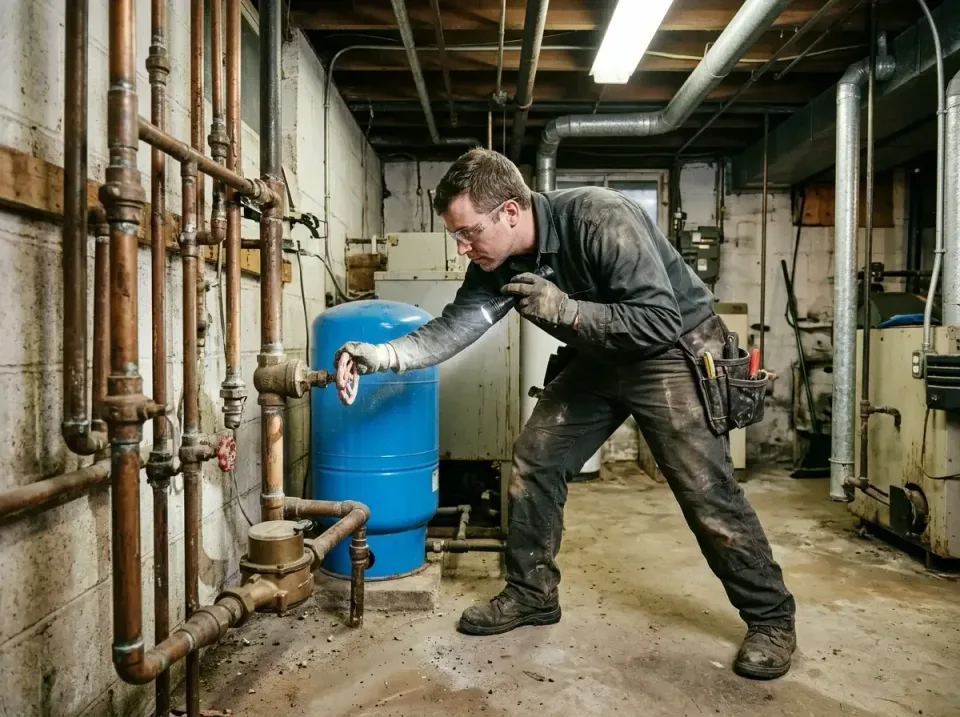
A well pressure tank stores pressurized water and reduces how often the pump must start; a damaged or waterlogged tank can make pressure fluctuate or leave the pump cycling repeatedly. If you have a well, note whether the pump runs unusually often and whether the pressure changes across several fixtures.
Do not open electrical equipment or adjust the pressure switch yourself. In Minnesota, rural properties often depend on private wells, so diagnosing the tank, pump, and supply together matters.
We check how the system behaves under demand rather than replacing a part based only on a symptom. For a related symptom, see why a well pump cycles every few minutes.
What Can You Check Before Calling?
Start with simple observations. Confirm that the main shutoff handle appears fully open, look for visible water around accessible plumbing, and check whether the weakness affects hot, cold, or both.
If a water softener or filter is installed, note whether the pressure change began after maintenance or a recent cartridge change; a restriction there can affect multiple fixtures. Do not dismantle equipment or force a stuck valve.
A weak shower throughout the house is different from one clogged showerhead, and that distinction can save an unnecessary repair. Spring freeze-thaw cycles stress buried water lines, so a pressure change after thawing deserves attention if it persists. Our crew tests the system before proposing work.
When Should You Call a Plumber Instead of DIY?
A homeowner can record symptoms and inspect visible areas, but a persistent whole-house pressure loss, suspected leak, or pump that keeps cycling calls for professional diagnosis. Stop using water and seek help promptly if you find active leakage or signs of a frozen or damaged pipe; avoid applying flame or heat to plumbing.
If only upstairs fixtures are weak, compare them with a downstairs tap and note the difference. Our field experience in Minnesota has taught us not to assume the regulator is at fault before checking the supply and piping.
Read why upstairs faucets can lose pressure while downstairs taps work for that distinct pattern, or review what causes pressure to drop when multiple faucets run.
Which Repair Fits an Overnight Pressure Drop?
If pressure fell in every room, the right next step depends on whether the source is a well, a valve, or a restricted line. The options differ.
A pressure tank sized from 20–80 gallons is selected for the well system and household demand; inspection helps determine whether its condition is actually causing the symptom. A booster pump should not be the first response: leak checks before installation help avoid increasing pressure against a leak.
Hot-water pressure diagnosis is appropriate when cold flow remains stronger. Minneapolis winters can expose plumbing to freeze-related trouble, so note any recent cold snap when describing the change.
| Option | Best for | Key detail |
|---|---|---|
| Well pump and pressure tank diagnostics | Pressure swings in a well-served home | Tank capacity commonly ranges from 20–80 gallons |
| Pressure regulator adjustment or replacement | A suspected control valve problem | Confirm the cause before changing the setting |
| Clogged water line repair | A restriction affecting multiple fixtures | Locate the blockage before choosing a repair |
| Hot-water pressure diagnosis | Cold flow seems normal, hot flow is weak | Isolates the hot-side cause before parts are replaced |
What Steps Help Before a Pressure Check?
A few notes and a clear work area help the plumber trace an overnight change without guesswork. Keep it simple. Ice formation can obstruct outdoor plumbing and hose bibs in Minnesota, so mention any outdoor fixture that stopped working.
-
Look for visible water: Inspect accessible plumbing and the area around the water heater without removing covers.
-
Check the shutoff: Locate the main shutoff and tell the plumber if it appears partly closed or is difficult to operate.
-
Prepare access: Clear a path to the regulator, basement mechanical area, and any well pump or tank.
-
Describe the timing: Record when pressure changed and whether it worsens when more than one tap runs.
If the cause remains unclear, ask for a measured pressure check before agreeing to equipment replacement.
Need Help With an Overnight Pressure Drop?
If the upstairs faucets are barely producing water or several rooms lost pressure overnight, record which fixtures are affected and whether hot or cold flow changed. Those details help distinguish a supply issue from a problem in the home.
A suspected leak deserves attention, even if you cannot see water yet. In Minnesota, rapid thawing can reveal winter pipe damage, so mention recent thaw conditions when you arrange service.
Our crew tests the system, explains the findings in plain language, and protects the home while accessing plumbing. For a measured diagnosis and repair plan, contact Minnesota Plumbing Pros about Low Water Pressure Repair or call (877) 773-0781.