What Makes a Well Pump Cycle Every Few Minutes?
A pump that starts every few minutes often points to a pressure tank that is not storing enough water, though a leak or switch fault can cause the same pattern. The repeated starts are called short cycling, and they can wear pump components faster than normal operation. First, note whether the pump runs briefly after a faucet closes or starts without anyone using water.
Power outages can stop electric well pumps, so after an outage, check whether power has returned before assuming a tank failure. Drought can lower private-well water levels; if the pump runs but water delivery weakens, avoid repeated testing and arrange a well-system check.
Spring freeze-thaw cycles can stress buried lines, so a new leak after thaw may also trigger cycling. Our Minnesota crew tests before recommending repairs.
Why does the pressure tank cause short cycling?
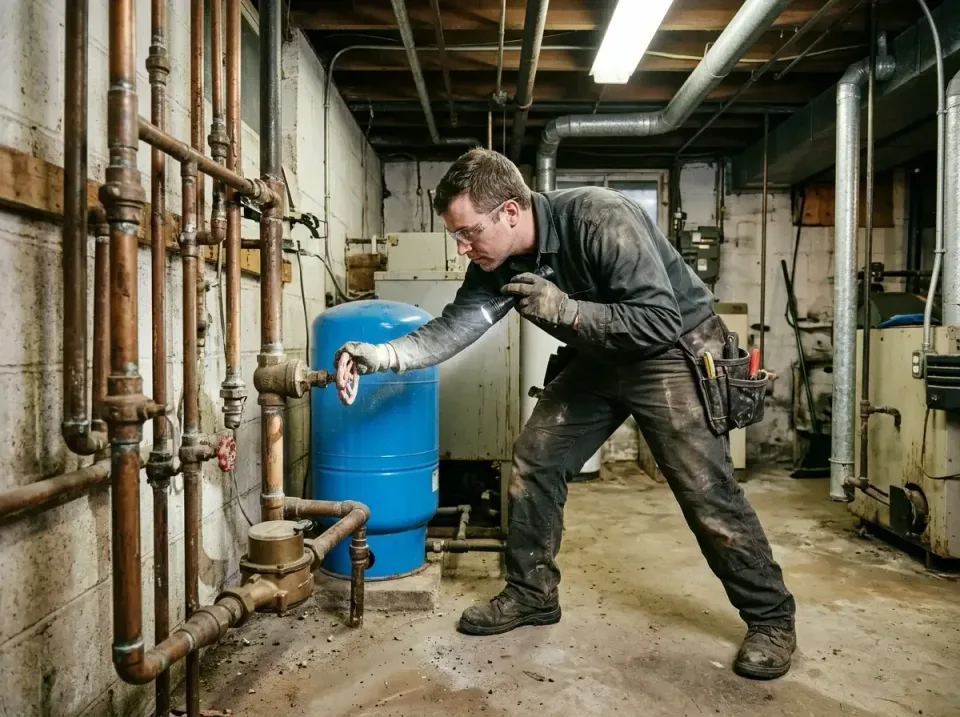
A pressure tank gives a well system a reserve of pressurized water between pump starts. If its bladder fails or its air charge is wrong, the tank may hold little usable water; the pump then switches on and off as small amounts are drawn.
We check the pressure switch and tank together rather than replacing a pump based on sound alone. The switch starts and stops the pump at set pressures, so a fault there can mimic a tank problem.
Seasonal temperature swings affect pipe materials and joints, making a small leak another possibility worth ruling out. Listen for repeated starts, but do not open electrical equipment.
Could a leak or weather change be involved?
If cycling began after water appeared near the tank, look for a visible leak and shut off water only if you can do so safely. Snowmelt can saturate basements and utility access areas; dampness around the tank may make it harder to spot a slow leak and can complicate safe access.
Northern Minnesota generally has longer, colder winters, so protect exposed plumbing and have the system inspected if freezing damage is suspected. A home near Grand Portage National Monument may face different seasonal demands than a Minneapolis property, but the diagnostic sequence remains the same: inspect for leaks, then measure system behavior.
We also account for conditions around homes near the Minneapolis Chain of Lakes, where access to indoor equipment can affect inspection setup.
What readings help identify the fault?
A pressure gauge on the system helps show whether pressure rises and falls around the switch’s cut-in and cut-out points. Watch the gauge during a normal draw, then note how quickly the pump restarts after water use stops.
A falling reading when every fixture is closed suggests leakage or a system fault; an abrupt drop while water runs can point toward reduced flow or inadequate tank drawdown. These observations are useful, but they do not prove the tank is defective.
In the field, we test the tank’s air charge with the system safely depressurized and compare it with the switch settings. Do not adjust the switch casually; incorrect settings can damage equipment.
When should you handle it yourself?
You can record the cycling interval, check that taps are fully closed, and look for obvious water around accessible pipes. Stop there if the pump keeps starting, a breaker trips, water delivery drops, or the tank shows corrosion or leakage.
Electrical checks and tank depressurization require care; a pressurized system can release water forcefully, and pump wiring presents a shock hazard. Our crew tests the system and explains the likely cause before recommending work.
For related reading, see when a Goulds well pump needs repair instead of replacement and pressure drops when multiple faucets run. If tank tests point to the vessel, our pressure tank repair service can address that specific fault.
Which Well Pump Cycling Fix Fits the Problem?
The right repair depends on whether cycling comes from the tank, controls, a leak, or restricted flow. Mill City Museum sits in a part of Minneapolis shaped by the river and historic industry; older buildings nearby can have different plumbing layouts, so access matters during diagnosis.
Cold winters increase frozen-pipe and pressure-loss risks, making a leak check sensible after a cold spell. Near Brainerd International Raceway, seasonal use patterns may also affect when a private system is under greatest demand.
| Option | Best for | Key detail |
|---|---|---|
| Pressure tank inspection | Frequent starts after small draws | Tanks commonly range from 20–80 gallons; confirm the air charge and drawdown. |
| Pressure switch check | Pump starts or stops at the wrong time | The switch controls cycling; verify its operation before changing settings. |
| Leak inspection | Pump runs when fixtures are closed | A small leak can drain stored pressure and trigger another start. |
Start with measured findings, not a parts swap.
Prepare the Well Pump and Tank for Inspection
Rural properties often depend on private wells, so identify the pump and tank before arranging a service visit. A home near the Bemidji Paul Bunyan and Babe Statues may have a well setup unlike a city-connected property; share the equipment locations and access details when scheduling.
The Headwaters of the Mississippi River is a useful regional reference, but the important detail for service is whether the system is a private well and where its controls are installed. Keep the work area clear. Use these steps:
-
Note the pattern: Record how often the pump starts and whether anyone is using water.
-
Find the equipment: Identify the pressure tank, pump controls, and electrical disconnect without opening panels.
-
Clear access: Move stored items away from the tank and leave a safe path to the well controls.
-
Check visible leaks: Look for water around accessible pipes, but do not dismantle pressurized fittings.
-
Protect the area: Move belongings and place a towel near visible drips; tell the technician about any recent changes.
Should You Call Minnesota Plumbing Pros About Pump Cycling?
A well pump that cycles repeatedly needs a cause identified before parts are replaced. If you can safely observe the system, record the timing and note leaks; leave pressure adjustments and electrical work to a qualified plumber.
Hot summers can raise household water demand, which may reveal a system that struggles to keep up. If a home near Lake Bemidji State Park sees frequent cycling during heavy use, share that timing during diagnosis.
Near Split Rock Lighthouse, seasonal travel to a cabin can also make it useful to report how long the property sat unused. Minnesota Plumbing Pros can inspect the pressure tank and controls, explain the findings, and outline a repair plan. Ask us about pressure tank repair or call (877) 773-0781.