Why Does Pressure Drop When Multiple Faucets Run?
The kitchen faucet runs, someone starts a shower, and the upstairs sink thins to a trickle. A pressure drop under combined demand usually means the supply or a shared pipe cannot deliver enough water at once. A restriction, undersized line, regulator problem, or limited well system can all contribute; the pattern alone does not identify which one.
Check whether the problem affects hot and cold water, and whether every fixture weakens or only those on one branch. Around Glensheen Mansion, the name is a useful Minnesota landmark, not a plumbing diagnosis: the same basic checks matter in homes across the state.
Cold winters increase the risk that a partially frozen pipe will restrict flow, so note any recent cold exposure. Even near Brainerd International Raceway, distant from Minneapolis, the practical test is the same: compare pressure with one fixture running and several.
What changes when several taps run?
A fixture can seem fine by itself because little water is moving through the plumbing. Open a second tap and the added demand exposes a restriction or a supply system that cannot keep up. Pressure at rest and pressure while water flows tell different parts of the story. A technician compares readings with fixtures closed and while a measured flow is running; the difference helps separate weak supply from a bottleneck inside the house.
A narrow or obstructed branch may affect one area, while a restriction in the service line can weaken fixtures throughout the property. Hot-only symptoms point toward the hot-water path rather than the shared cold supply.
We have seen Minnesota homeowners assume a pump is failing when a restricted pipe or regulator was the actual cause. Begin with the pattern, not a replacement part.
If upstairs faucets are especially weak, see why upstairs faucets lose pressure while downstairs taps work.
Could hot summers expose a supply limit?
They can. Hot summers can raise household water demand, so more simultaneous showers, laundry, and outdoor use may bring a marginal system’s weakness into view.
This does not prove the weather caused a plumbing fault; it can make an existing restriction more noticeable. A home near the Cathedral of Saint Paul, like one elsewhere in Minnesota, still needs readings at the fixtures and supply to distinguish demand from a mechanical problem.
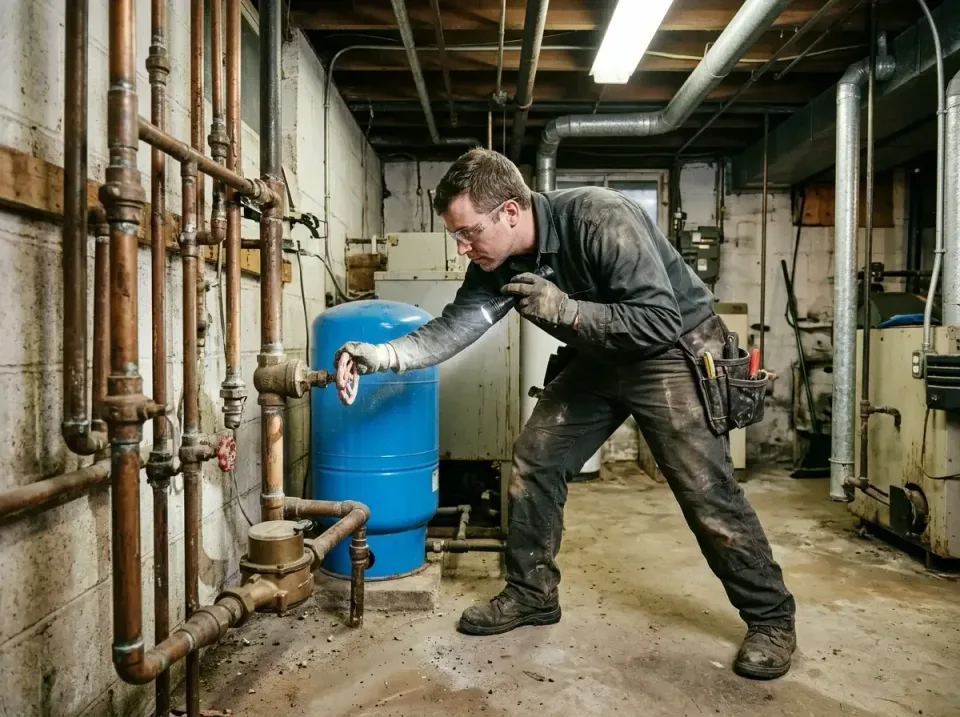
Properties around Lake Bemidji State Park may rely on a different supply arrangement than a city-connected home, and that affects the diagnostic path. Rural properties often depend on private wells, where pump output, well drawdown, and pressure-storage equipment can limit sustained flow.
Ask whether the pump runs continuously or cycles while multiple taps are open. For a private-well home, repeated cycling is a useful clue, not a reason to turn a pressure control without testing.
When should you call instead of adjusting parts?
If only one faucet is weak, cleaning its aerator is a reasonable first check. If several fixtures lose flow together, avoid adjusting a regulator or changing pump settings without measurements; an incorrect change can create unsafe or damaging pressure. Stop DIY work if you find a leak, hear repeated pump cycling, or cannot identify the correct shutoff.
In our field work, the skipped step is often measuring both static pressure and flowing performance before recommending equipment. Minnesota Plumbing Pros tests the system, checks the likely restriction points, and explains the findings before repair.
A booster is not a cure for a clogged line, and replacing a regulator will not fix limited well production. If a household is comparing a private-well symptom, check how a well pump’s pressure tank affects frequent cycling.
What does a whole-house test establish?
A useful test records pressure with fixtures closed, then observes what happens as water runs at more than one fixture. Flow rate matters too: a pressure reading alone may not show whether a pipe can deliver the amount the household needs. Our crew checks supply conditions and the plumbing path before proposing a repair, then explains which reading supports the recommendation.
This is especially helpful when a pressure drop happens only during overlapping use. We can distinguish a source-side limit from a regulator issue or a restricted interior line rather than treating every complaint as a pump problem. A clear diagnosis gives the homeowner a repair choice grounded in the system’s actual behavior.
Match the Pressure Problem to the Right Repair
The right option depends on whether pressure falls at the supply, across a control, or within a pipe. Compare the system while water is moving; a normal reading with every tap closed can hide the trouble. Do not size equipment from symptoms alone.
| Option | Best for | Key detail |
|---|---|---|
| Municipal supply check | Multiple fixtures weaken together on city water | Compare incoming and flowing pressure |
| Well system diagnosis | A well home loses flow under demand | Pressure tank sizes commonly range from 20–80 gallons |
| Booster pump installation | Supply is confirmed but cannot meet demand | Select by required flow; listed capacities range from 5–20 gallons per minute |
| Regulator repair | A pressure-reducing valve restricts delivery | Common settings are 40–60 PSI |
| Water line inspection | A blockage or damaged pipe is suspected | Residential service lines are commonly 3/4–1 inch; branches 1/2–3/4 inch |
A customer driving past Target Field should not mistake a familiar landmark for a service boundary; the same diagnosis-first approach applies across Minnesota. Near the Duluth Aerial Lift Bridge, a local plumber can still compare supply and fixture readings before recommending equipment. Split Rock Lighthouse is another reminder that Minnesota properties span very different settings, so the home’s actual system not its location’s appearance should guide the repair.
How Do You Prepare for a Pressure Check?
Before a visit, note which fixtures lose flow and whether the change affects hot water, cold water, or both. Keep it simple.
Ice formation can obstruct outdoor plumbing and hose bibs, so mention any exterior fixture that stopped flowing after freezing weather. A thaw near Gooseberry Falls State Park is a local reference point, but the useful detail is whether the affected pipe is exposed or indoors.
-
List affected fixtures: Record which taps are open when the pressure drop begins.
-
Clear access: Make the regulator, basement mechanical area, and relevant fixtures reachable.
-
Locate equipment: Identify the main shutoff and, if applicable, the well pump and tank.
-
Plan water use: Tell household members that testing may involve running several fixtures together.
-
Protect the area: Move stored items and protect floors near plumbing access.
Rapid thawing can reveal winter pipe damage, so report new damp spots or a sudden change after a thaw. Keep the work area accessible; Mill City Museum and Como Park Zoo and Conservatory are familiar local landmarks, but the key preparation is inside your home.
Get a Clear Answer About Falling Pressure
A pressure drop when several taps run is a symptom, not a diagnosis. If one fixture is affected, start with its local screen or valve; if several weaken together, arrange a system check before replacing a pump or regulator.
Severe thunderstorms may cause power interruptions, and an outage can stop an electric well pump, so check whether the home has power before interpreting a well-system failure. Near the Boundary Waters Canoe Area Wilderness, that distinction may matter for a remote property just as it does in town.
Heavy rainfall can also affect shallow wells and drainage; after a storm, mention any change in well performance or water conditions. Minnesota Plumbing Pros can test the system and explain the repair plan.
Request Low Water Pressure Repair when shared faucet use repeatedly causes a noticeable drop.